Here’s a look at how bread is made at the industrial scale:
Step 1: Sieving:
The flour is passed through a sieve with the use of a motor. The motor and the sieve make up the sieving machine that is shown below.

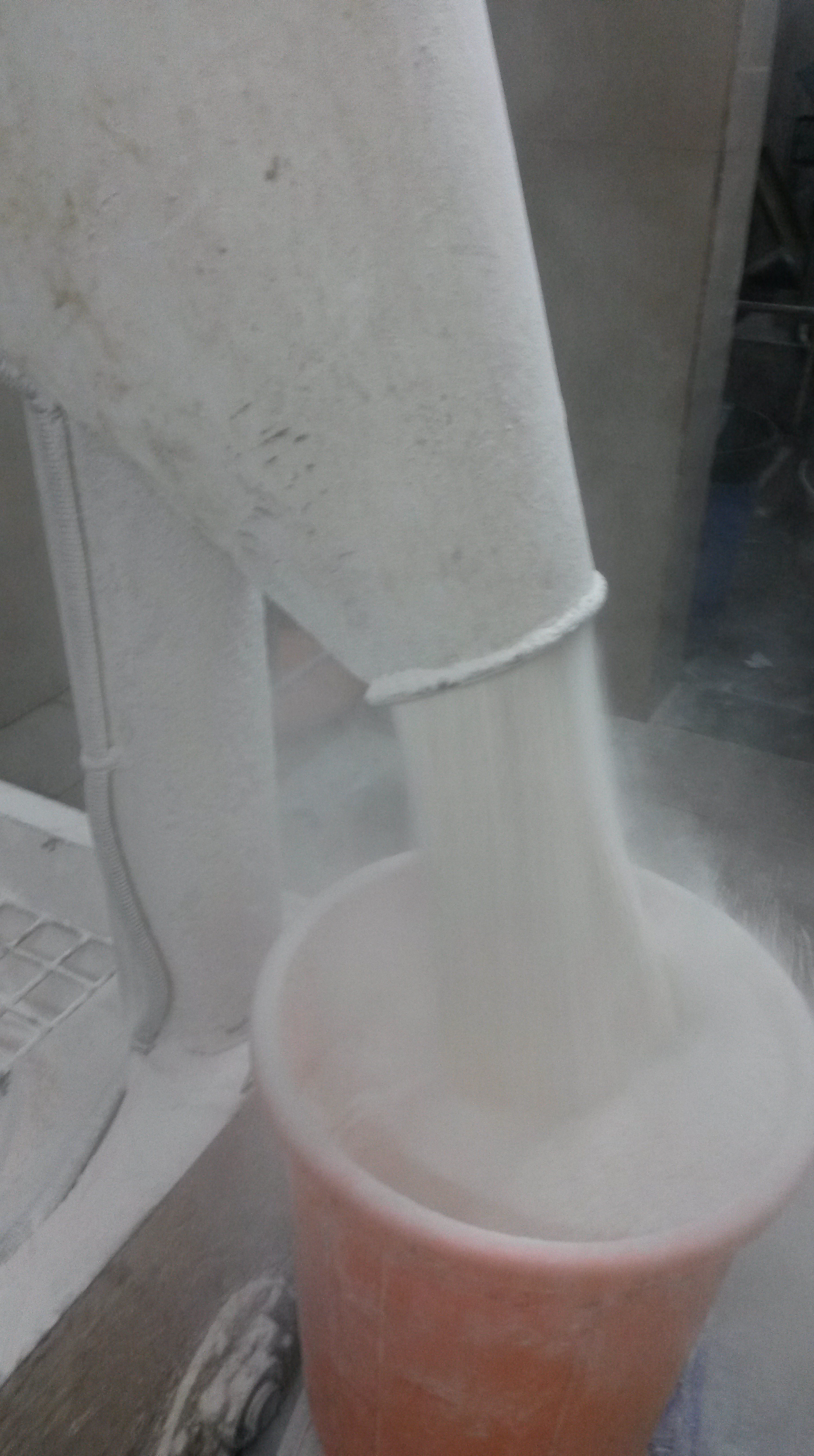
Sieving makes the flour fine and removes any impurities in the flour.
Step 2: Mixing:
The ingredients to make the bread, including flour, water, oil and yeast, are mixed together in the desired ratio (depends on the bread being made), as shown below.

Interestingly, cold water is used in the mixing process. This is to slow down the anaerobic respiration of yeast (see step 4) and prevent the bread to rise too fast.
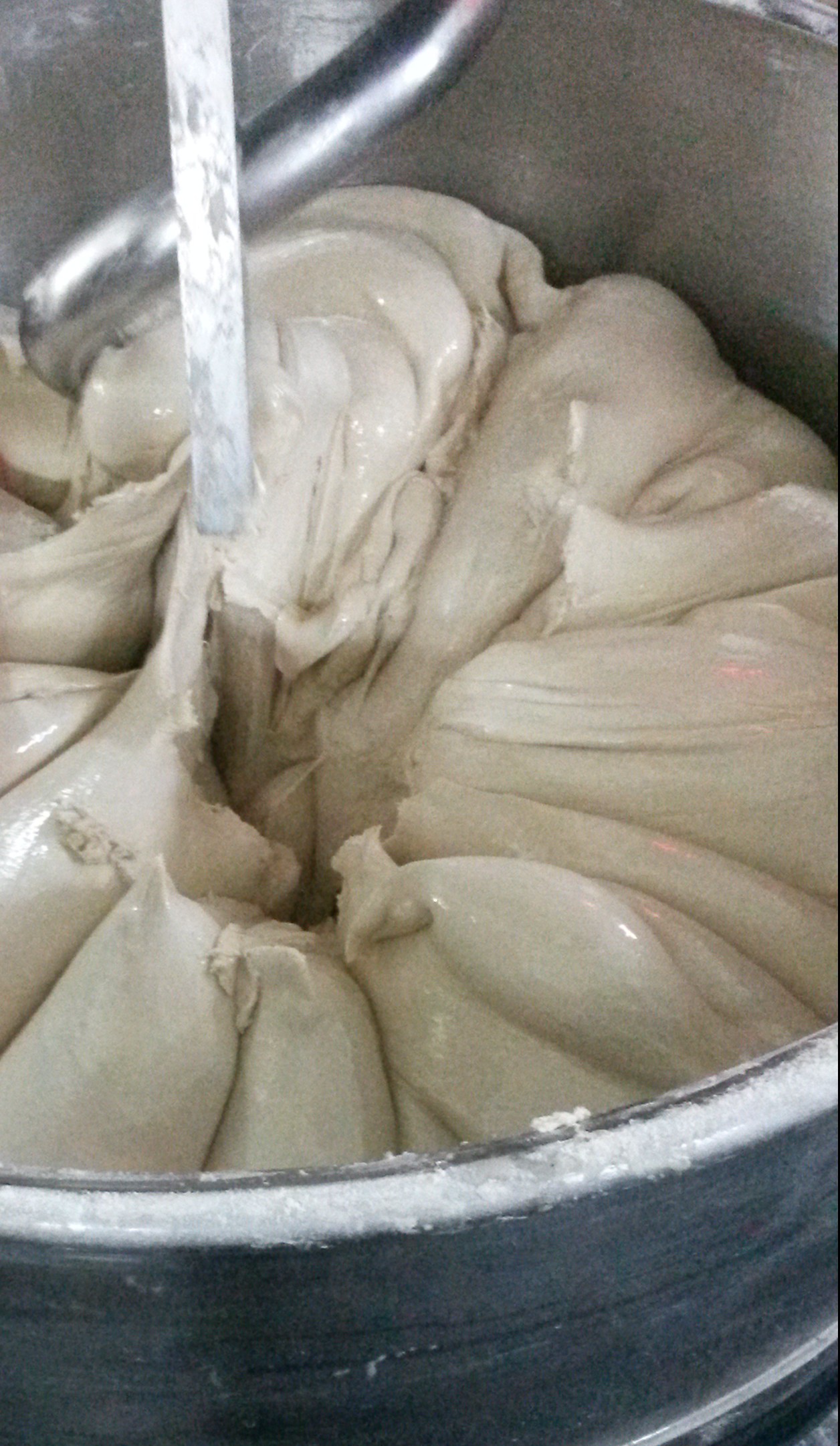
After a while, about 20- 40 minutes depending on the quantity of ingredients, the water and oil bind themselves to the flour producing the dough of the consistency shown in the image below.
Step 3: Slicing and Rolling:
The dough is then transferred to a slicer and roller, the workings of which are illustrated in the video below:
As seen, dry flour is added to the dough to prevent it from sticking to any of the machinery.
After the dough is rolled it gets put into the bread moulds and into the proofing room.
Step 4: Proofing:
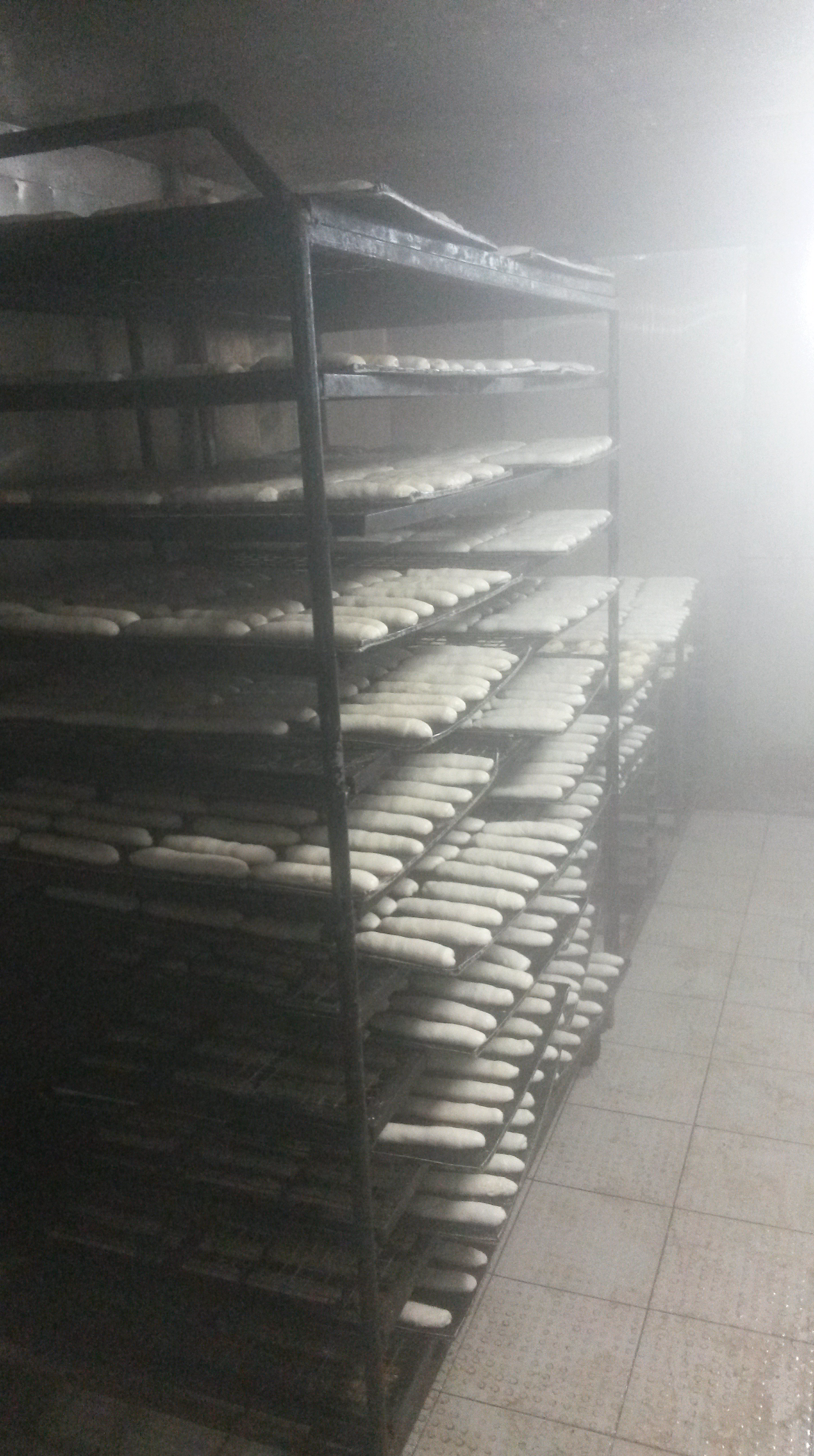
Proofing refers to the stage where the yeast is allowed to ferment and dough to rise before being put in the oven. It is put in the proofing room, which has a high temperature of about 60- 80 degrees Celsius, with the moisture level in the room regulated. The image below shows the proofing room:
Fermentation and the rising of dough occur due to the anaerobic respiration of yeast, i.e., the conversion of sugars to produce energy in the absence of oxygen in contrast to aerobic respiration which happens in the presence of oxygen.
The first step in both in aerobic and anaerobic respiration is glycolysis, which converts glucose to pyruvate, according to the simplified equation given below:
C6H12O6 —-> 2 CH3COCOO– + 6 H+
In yeast, the pyruvate is then converted to an acetyldehyde, using the enzyme pyruvate dehydrogenase, as illustrated by the equation below:
CH3COCOO– + H+ —-> CH3COH + CO2
The carbon- dioxide produced in this reaction is responsible for the bread rising.
Finally, the acetaldehyde is converted to ethanol, using the enzyme alcohol dehydrogenase, according to the equation below:
CH3COH + 2H+ —–> C2H5OH + Energy
Overall, the simplified equation for fermentation in yeast during proofing is:
C6H12O6 ——> 2 C2H5OH + 2 CO2 + Energy
Humans, on the other hand, do not contain the enzymes yeast does and therefore produce lactic acid during anaerobic respiration instead of ethanol.
After the fermentation of yeast starting to occur during proofing, the dough can finally be put in the oven, to finish the fermentation process.
Step 5: Baking:
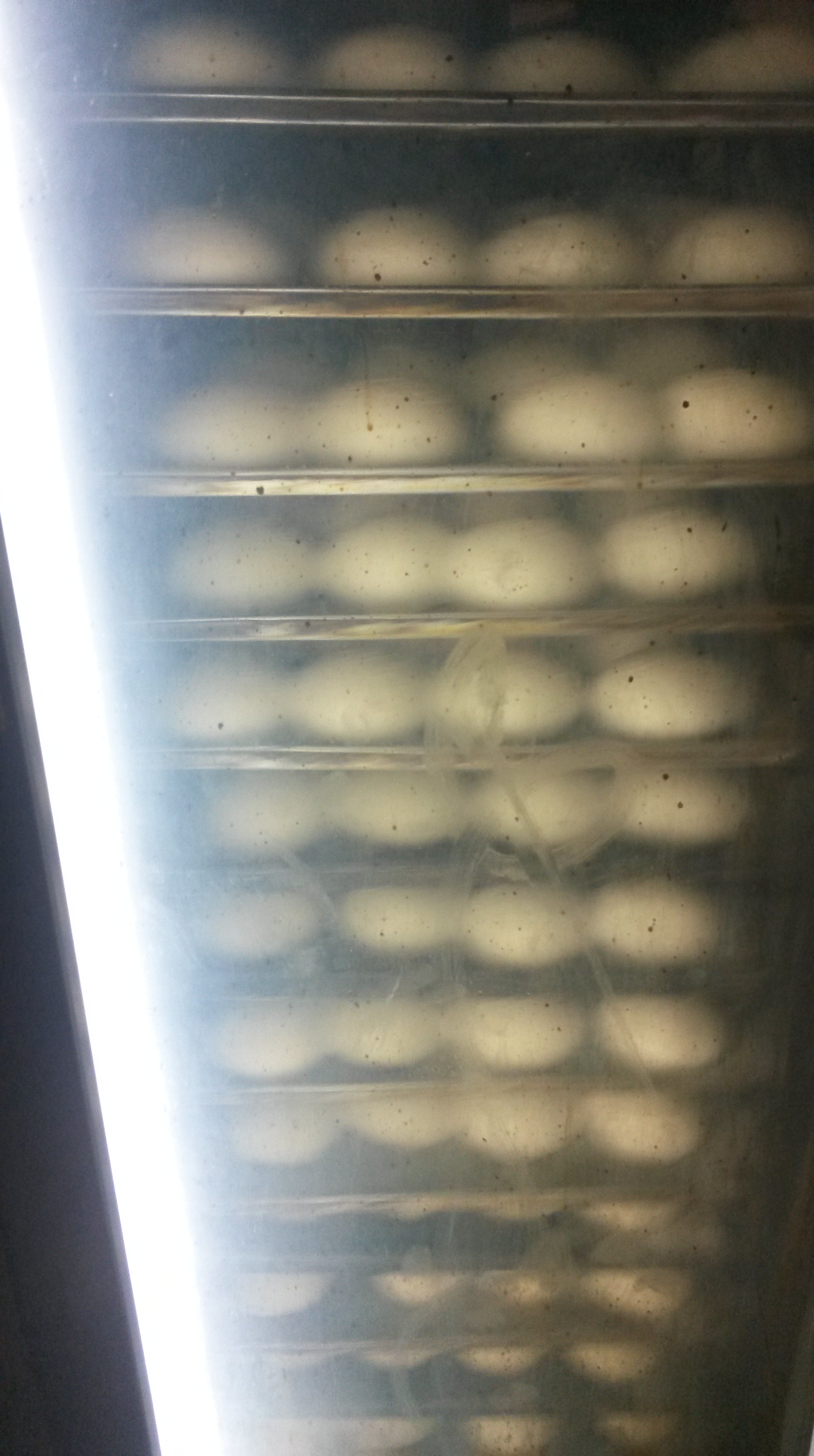
The proofed dough is put in large industrial ovens, as seen in the image below:
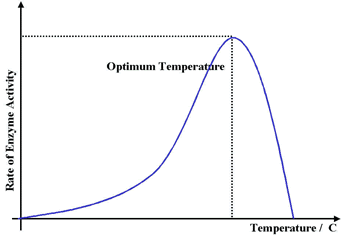
The temperature must be controlled in the oven precisely to ensure the optimum activity of the enzymes are reached. Enzymes, as the graph below shows, work optimally at a particular temperature. If the temperature is too high their active site gets denatured and if the temperature is too low, not enough energy is available, reducing the rate of reaction.
The high temperature in the oven also evaporates the alcohol produced during anaerobic respiration, and this the final bread does not have a significant alcohol content.
Step 6: Cooling:
The bread is then left to rest for about half an hour, before it can be cut, as the image below shows:
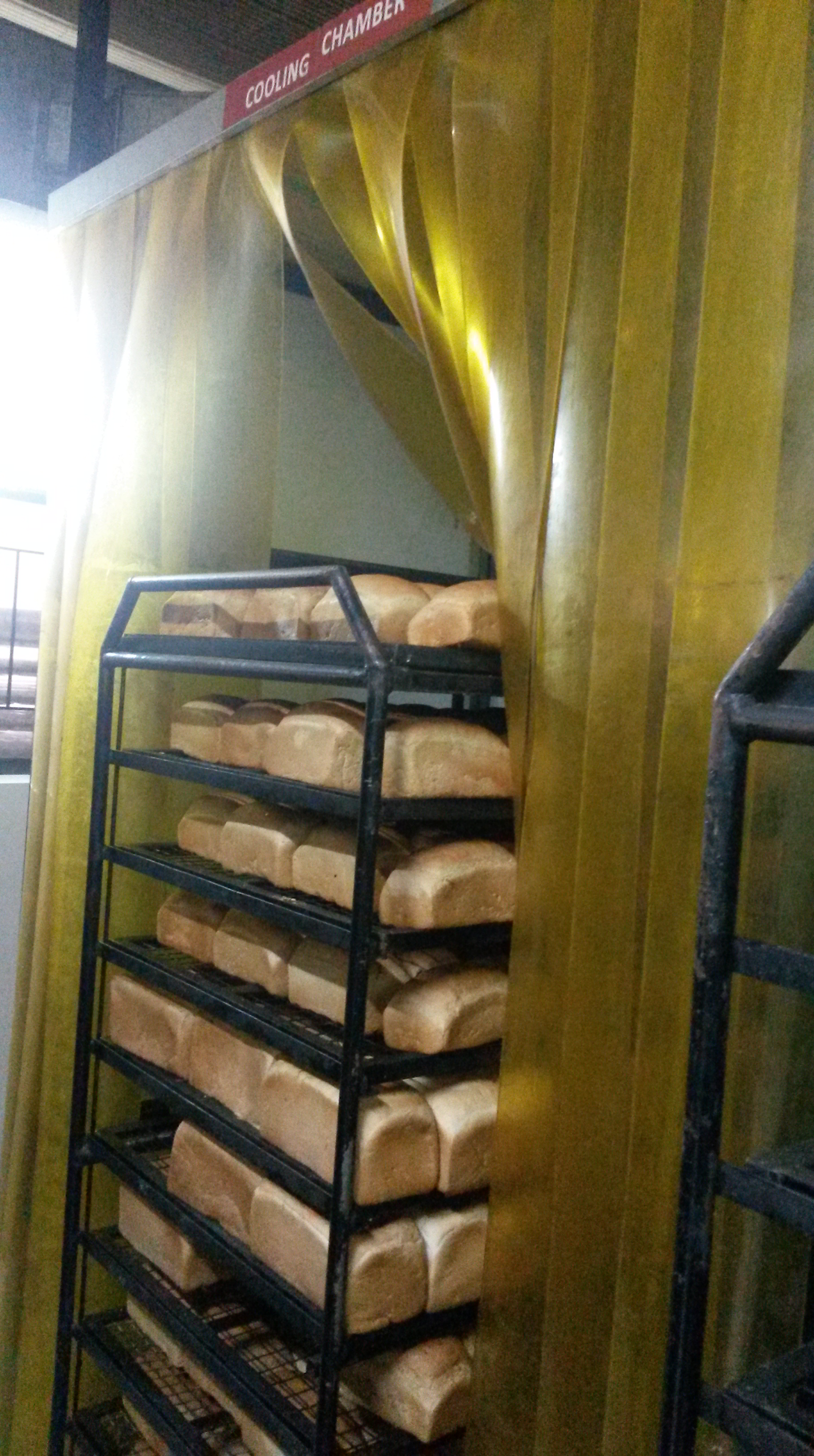
During the cooling process, the bread continues to bake and any moisture evaporates, without which the bread would have too much moisture.
Step 7: Slicing and Packing:
Finally, the loaves of bread are sliced using the machine shown below. The blades move back and forth while, the bread proceeds down the ramp, cutting the bread.

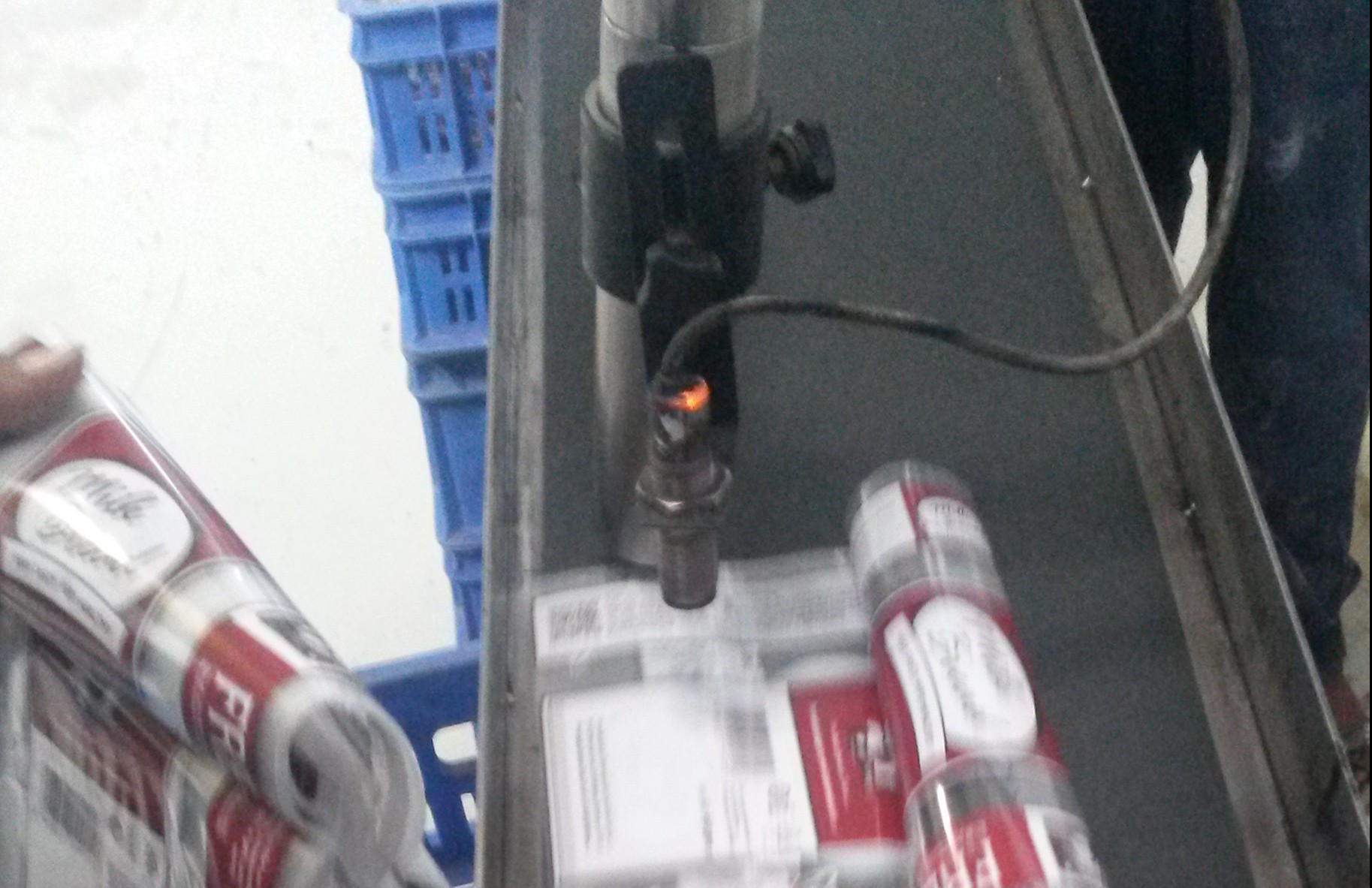
As bread is a perishable good, the manufacturing date must be printed onto the plastic packet. In order to do this there is a computer controlled machine, that changes the date everyday and prints in on the packets, as shown below:
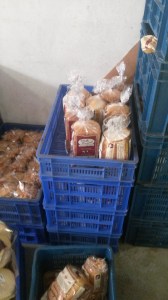
Finally, the cut bread is packed into plastic packets manually and ready for transportation.
 Divyanshu Pachisia

Great post! So interesting to see the process behind commercially made bread!
LikeLiked by 1 person