Motivation: To re-design the pulse-oximeter, the medical device used to measure blood oxygen levels to make it more reliable. Currently, pulse-oximeters false alarm more than 60% of the time in critical care settings. Additionally, the device cannot be set up sufficiently fast to be effective in emergency situations, such as in a delivery room.
Phase 1: Inspiration and Synthesis
By visiting hospitals, conducting interviews and researching the underlying science behind the oximeter we arrived at some key insights to tackle the problem.
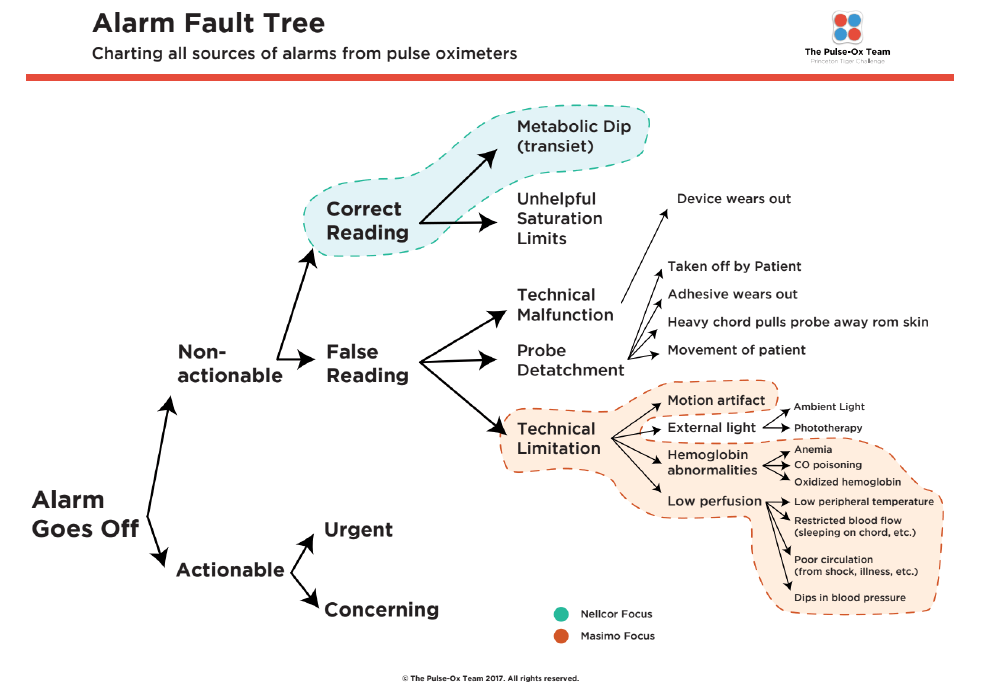
(1) Alarm Faults
– Maps the different possible problems when an alarm rings, with specific focus on non-actionable alarms.
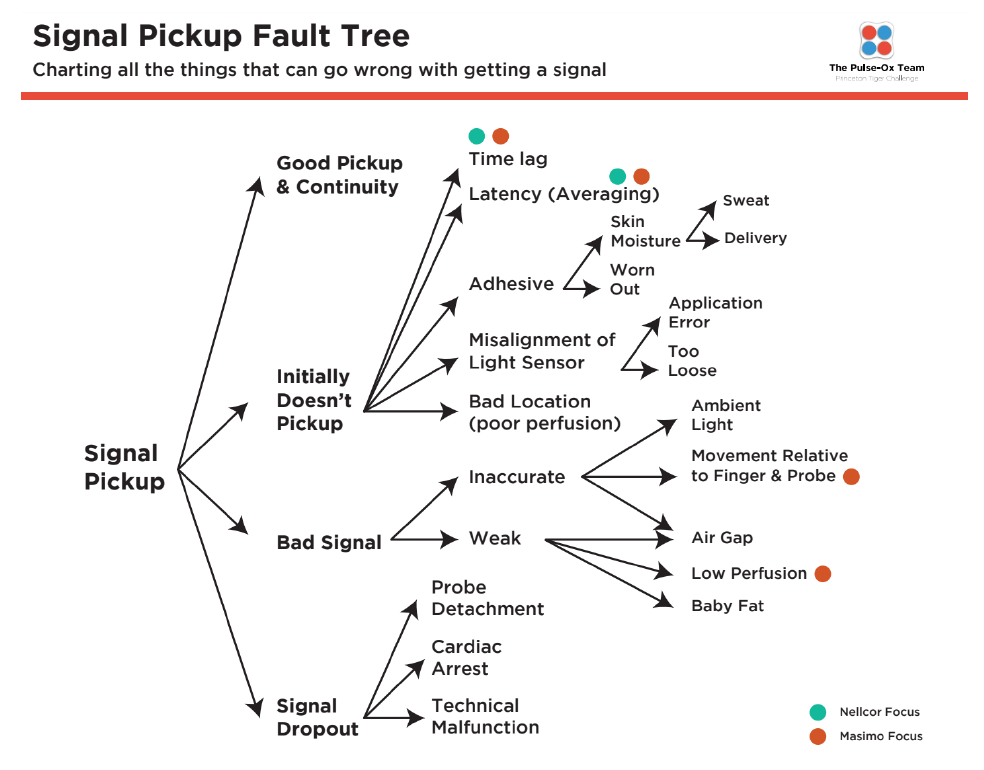
(2) Initial Signal Pickup Faults
– Maps the issues associated with getting a quick signal after the device is put on, especially relevant in emergency situations.
Key Insights:
- Saturation Limits for when alarms ring is arbitrarily set, which result in a high frequency of non-actionable alarms, as each patient has a unique ‘normal’ saturation range.
- In emergency settings, the current setup of the pulse-oximeter is not quick enough. The device was designed for continuous monitoring, resulting in shortcomings in time-sensitive situations.
Phase 2: Ideation and Prototyping
We came up with over 500 ideas and chose the two shown below.
1. An alarm management system that uses a machine learning algorithm to suggest changes in the saturation range, and reduces non-actionable alarms: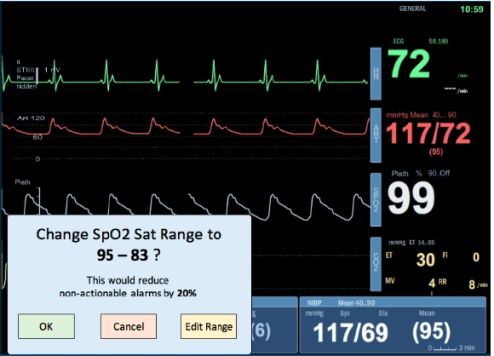
2. A portable puck-like oximeter, utilizing reflective oximetry to be used in emergency settings for quicker signal pickup.
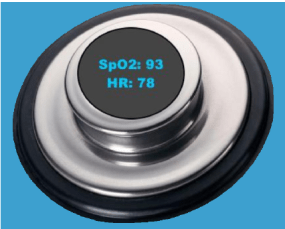
Note: Detailed drawings of the device are not shown because we are in the process of applying for a patent.
 Divyanshu Pachisia