Motivation: To build a more cost-effective table tennis ball pitching machine, by eliminating the air compressor.
This is a video showing the ball pitcher I built:
Traditional table tennis ball pitching machines work by using air to blow table tennis balls onto the other side of the table, as shown in the image below. Due to the short burst of air required these machines use an air compressor, which makes them expensive.
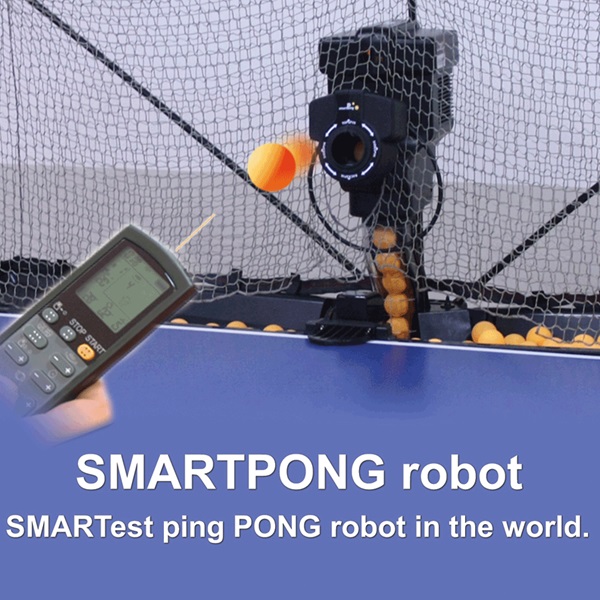
A Traditional Table Tennis Ball Pitching Machine Image Source: http://shop.butterflyonline.com/smartpong-table-tennis-robot-s400
The basic concept behind the machine I built is having something physically hit the table tennis ball, eliminating the need for air and a compressor making the machine cheaper. My initial prototype, made with a toy fan is shown below.
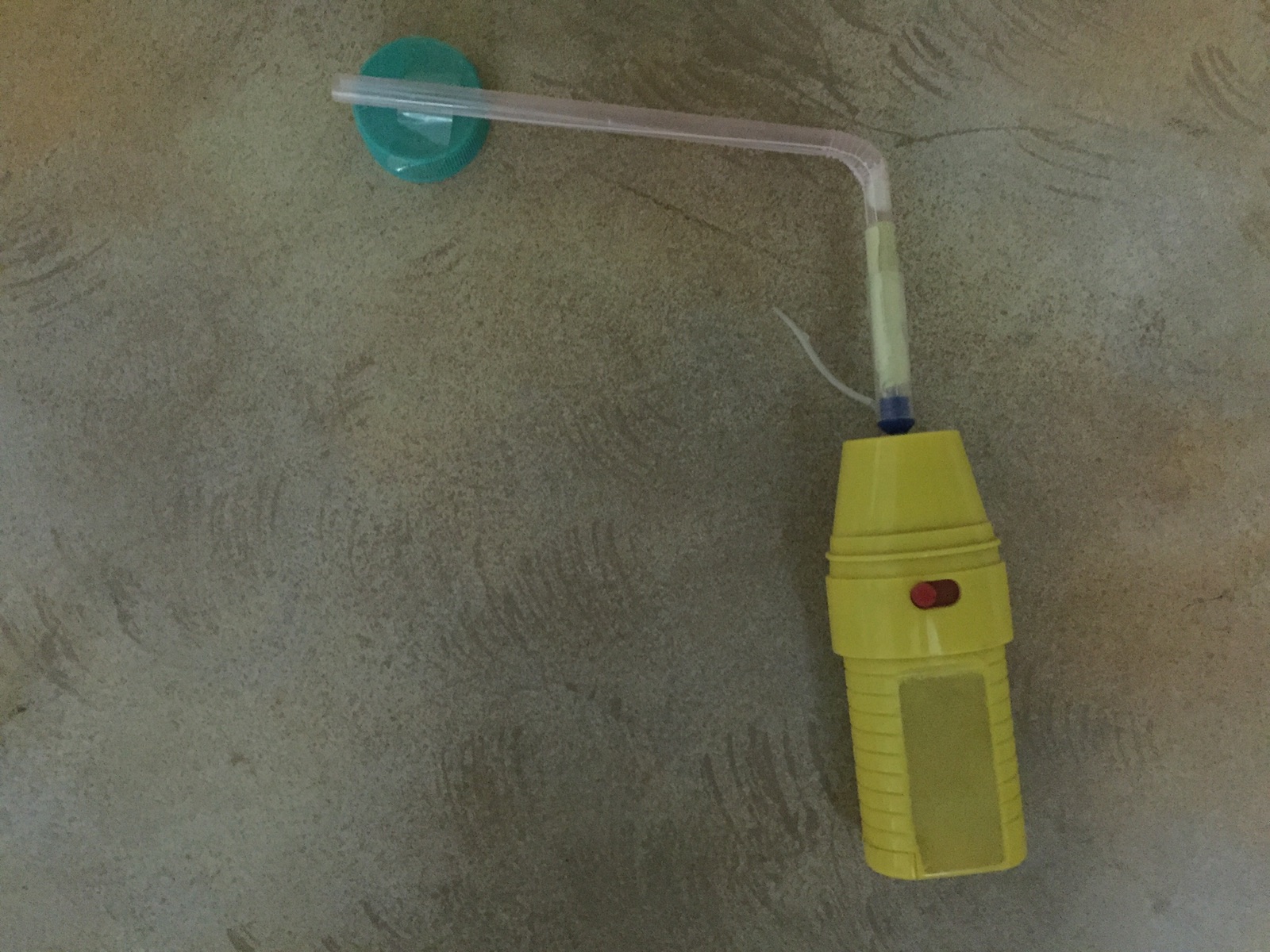
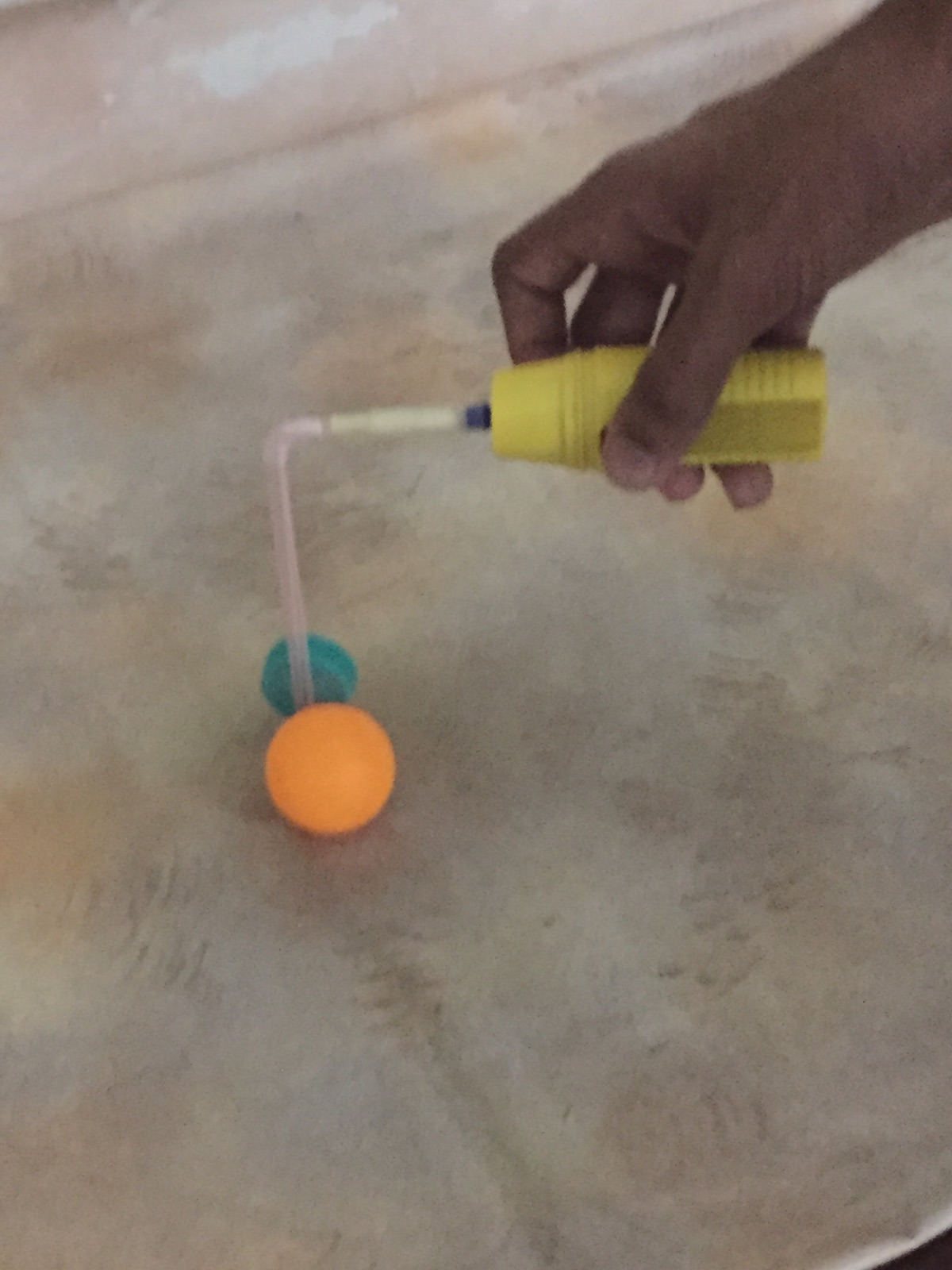
This initial prototype after several iterations led to the machine shown in the image below.
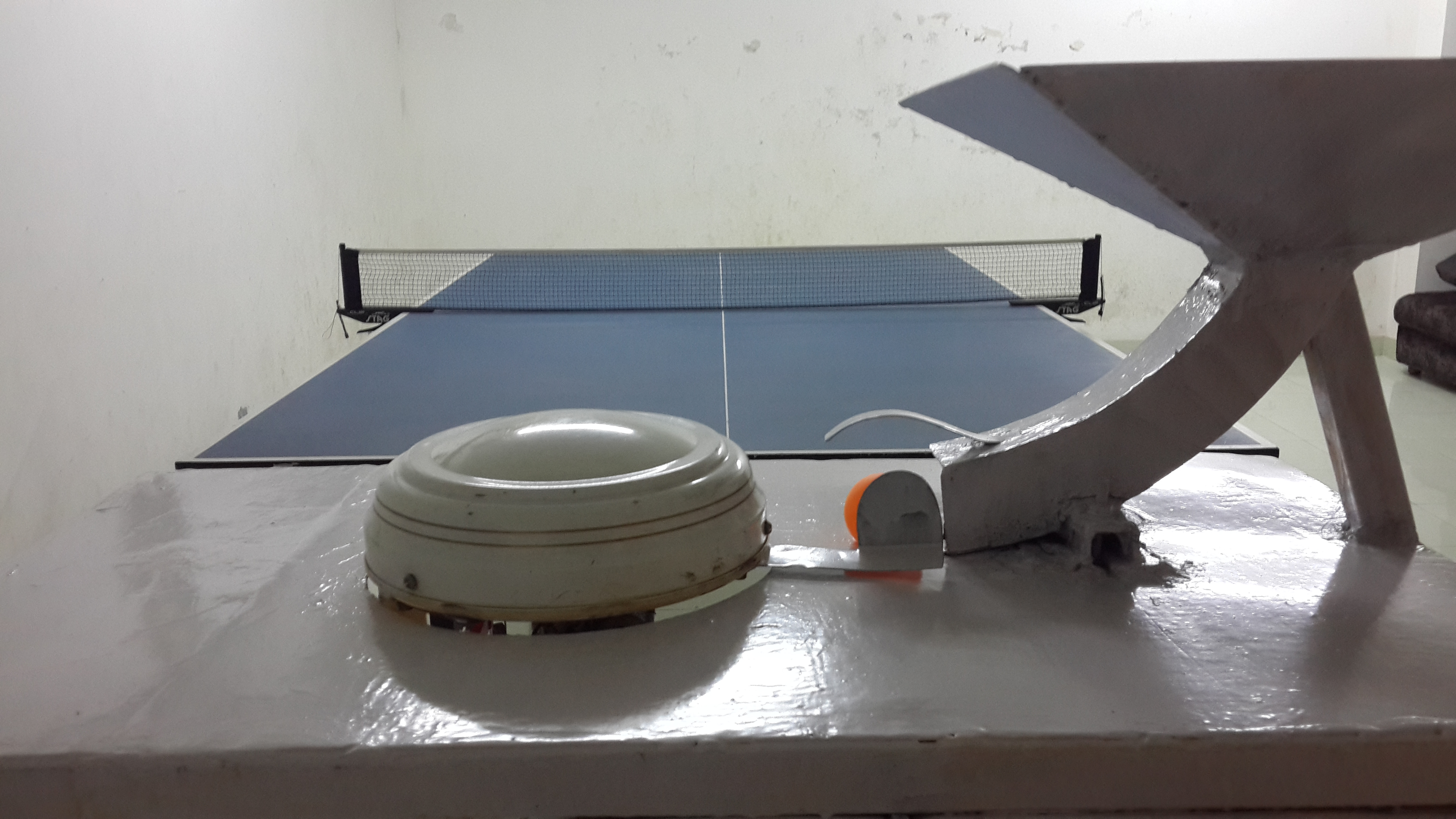
An arm is attached to an old fan motor and rotates continuously. The balls are put in the hopper and they are released one by one into the arm’s path. The arm then hits the ball over the net onto the other side of the table.
This concept, however, needed to address the following two issues:
- Only one ball is released at a time.
- The fan needs to rotate at a high speed to ensure the ball crosses the net. Due to this high speed, the frequency of the balls hit would be too high if one was hit every revolution. Thus, a mechanism is needed to ensure that a ball is released after a certain arbitrary number of revolutions preset by the user.
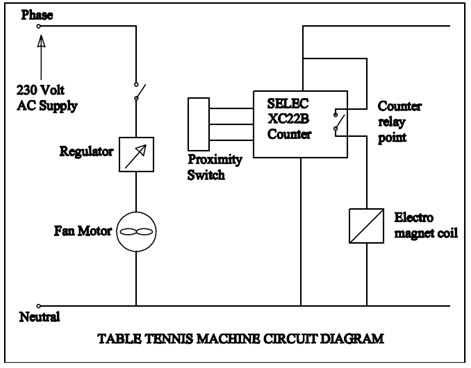
A sensor-counter-electromagnet circuit was used to control the release of the ball, which works as described below:
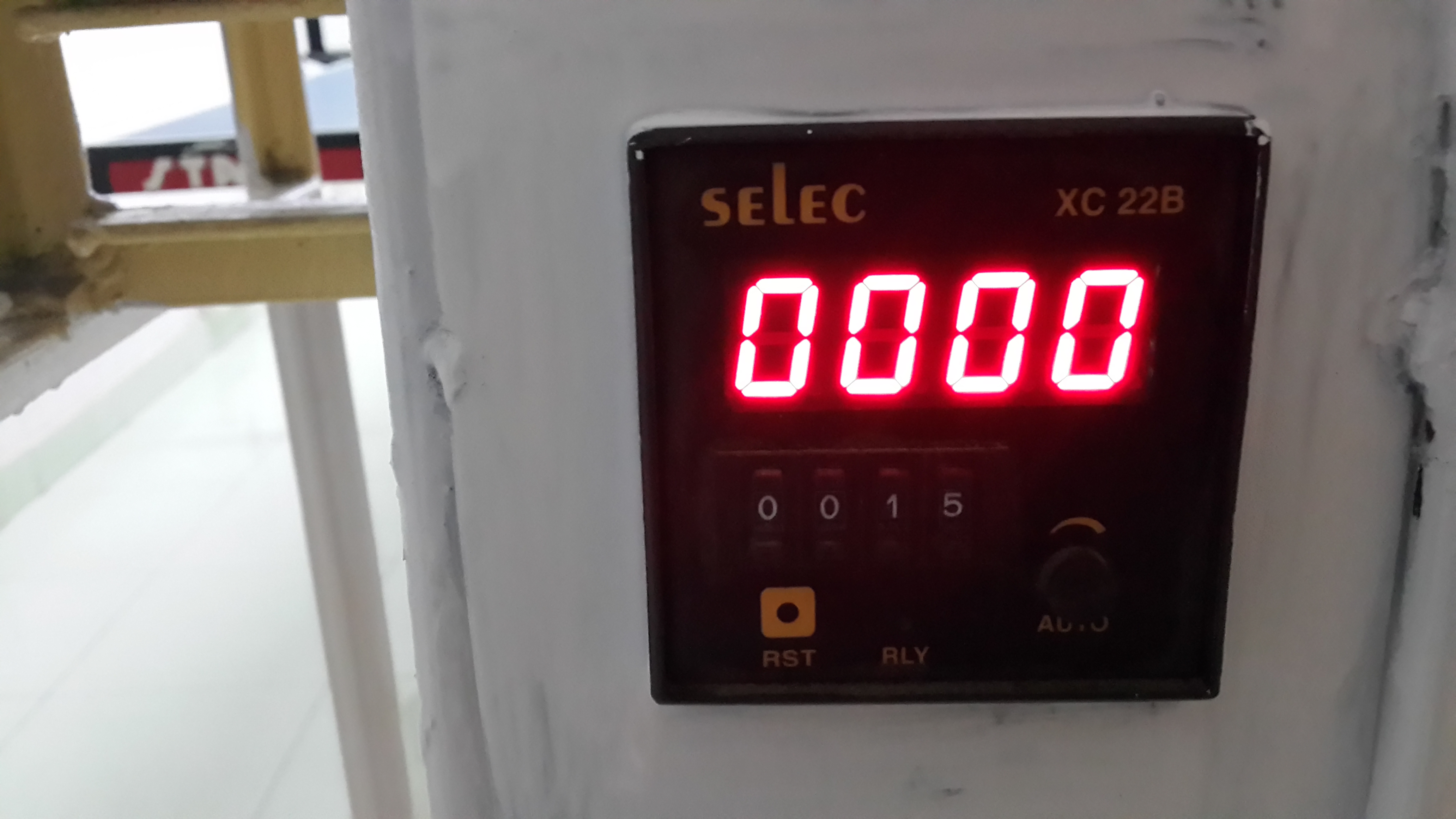
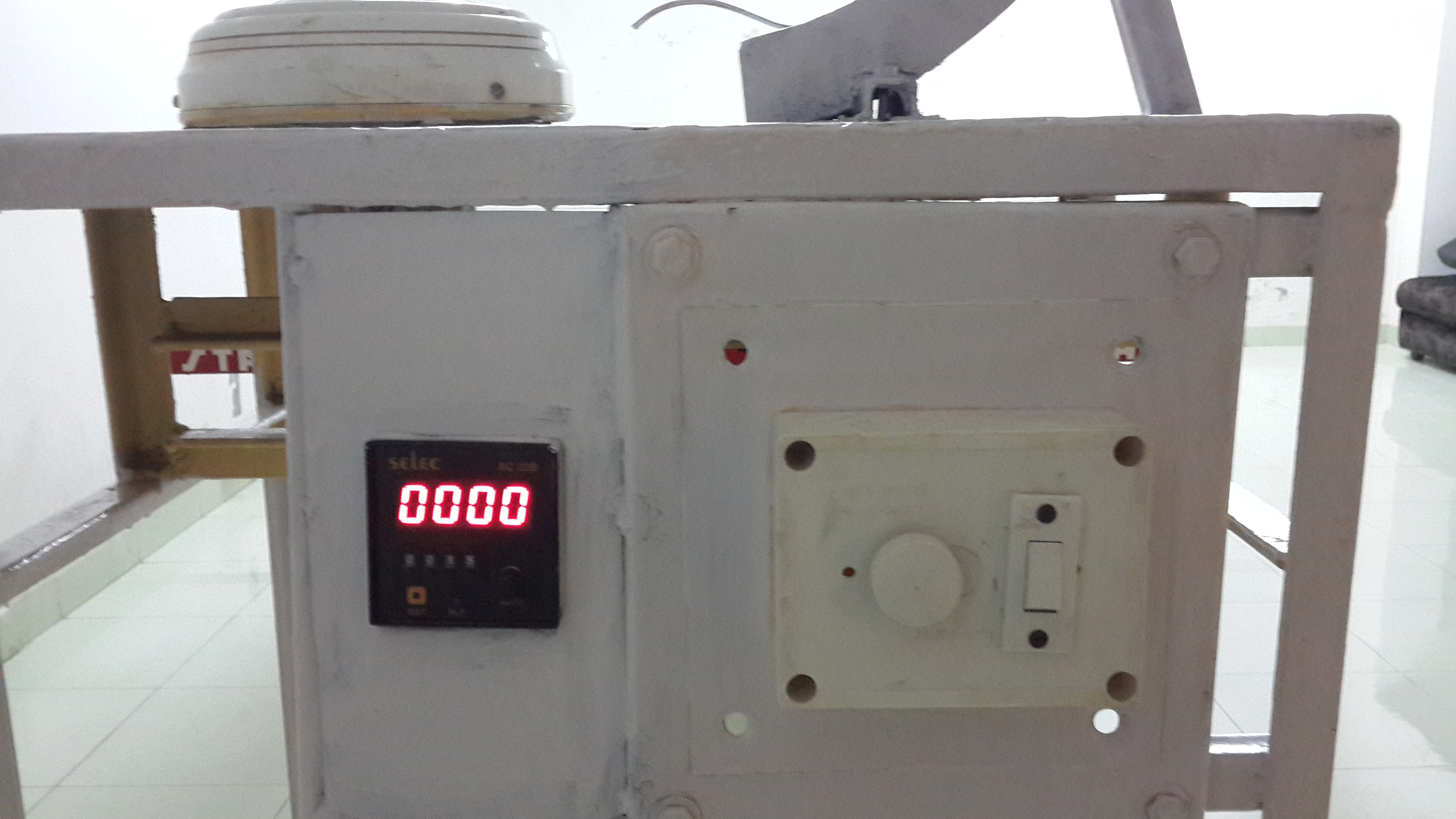
Step 1: A preset number of rotations after which a ball should be released and hit is chosen by the user. This is preset in the counter. The setting shown below is preset to 15 revolutions, using the buttons at the bottom of the counter.
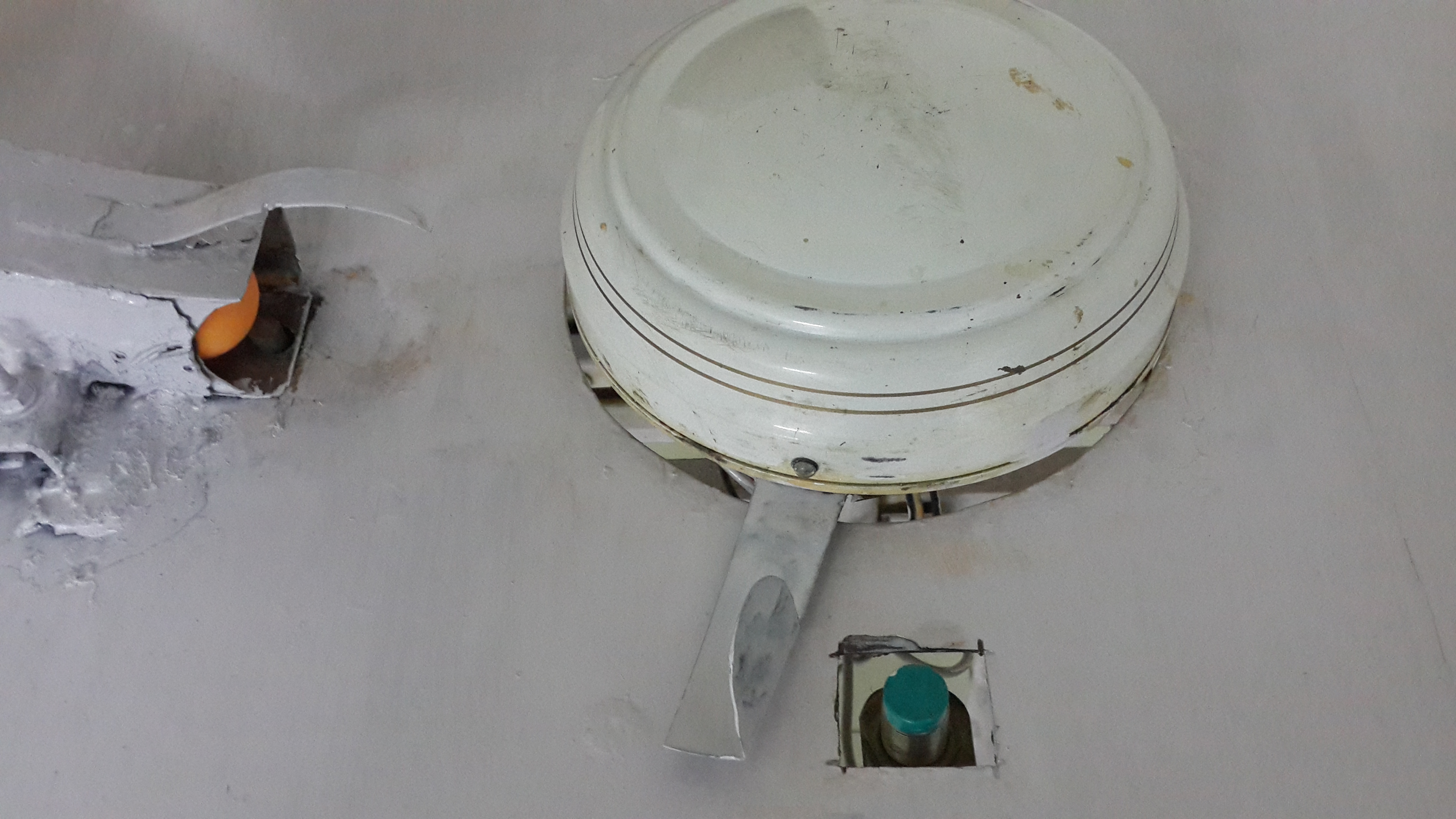
Step 2: A sensor detects the number of revolutions completed by the arm. The green circle that the arm is about to go over in the image is a proximity sensor, that detects the arm every time is passes over it.
Step 3: The output from the sensor is transmitted to the counter which records the number of revolutions. It adds one to the count every time the sensor detects the arm and sends a signal.
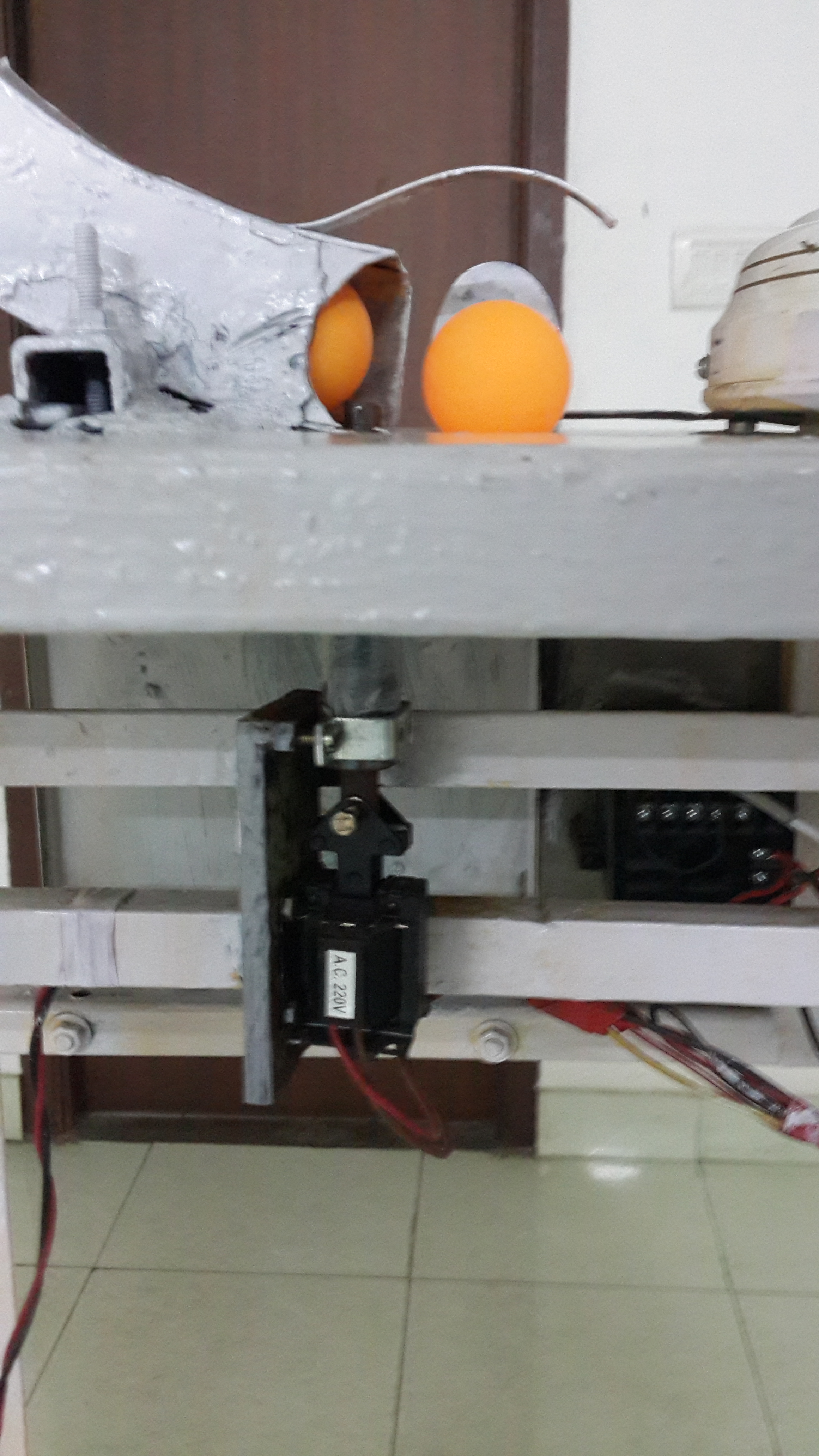
Step 4: When the number of revolutions equals the preset number determined by the user, an electromagnet is activated. This electromagnet attracts a metal rod downward which previously acted as a stopper for the balls.
The black object under the platform is the electromagnet. Once it is activated, the rod that acts as a stopper is attracted downward to the magnet. It moves downward for a time period just long enough for one ball to flow out and be hit by the arm to the other side of the table. The electromagnet is then deactivated and the rod is repelled upward to stop the rest of the balls from flowing out.
Step 5: The count is reset to zero and the process repeats for the next ball.
The circuit for this mechanism is shown below:
Another adjustment made is the addition of a regulator, that enables the user to control the speed of the arm. A slower speed results in the ball landing closer to the net and a faster speed results in the ball landing further away from the net.
There are a couple of advantages of the table tennis ball pitching machine I’ve built when compared to traditional ones:
- It is cheaper, as it doesn’t use expensive parts like a compressor.
- The place where the ball lands varies randomly, more accurately simulating a real table tennis game. This is because the arm hits the ball at slightly different places each time depending on where in its path it is when the ball is released. This is possible in traditional machines too, but has to be controlled by a remote by a second person.
- The frequency of release of the ball can be controlled easily and inexpensively using the setting on the timer.
 Divyanshu Pachisia