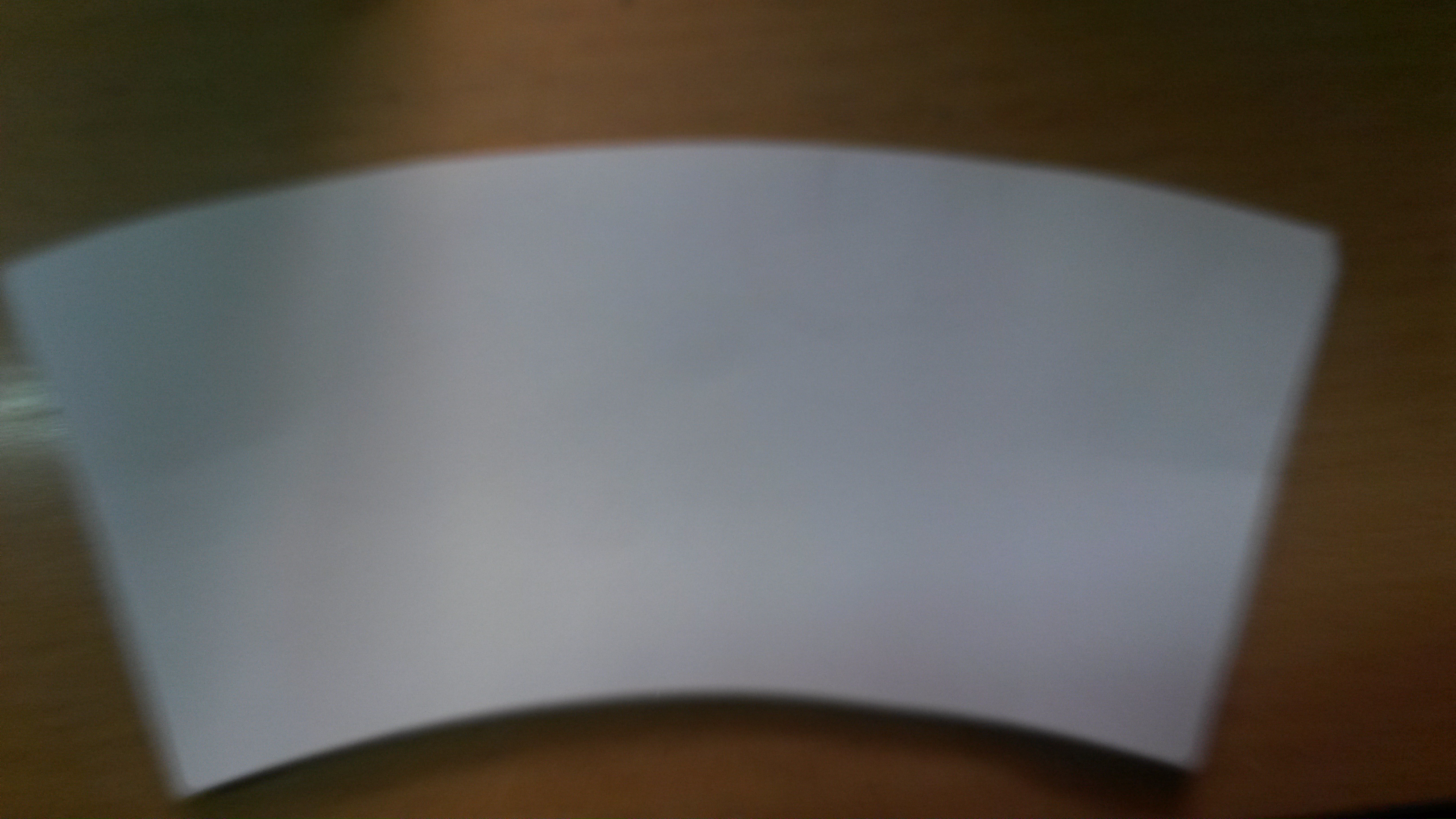
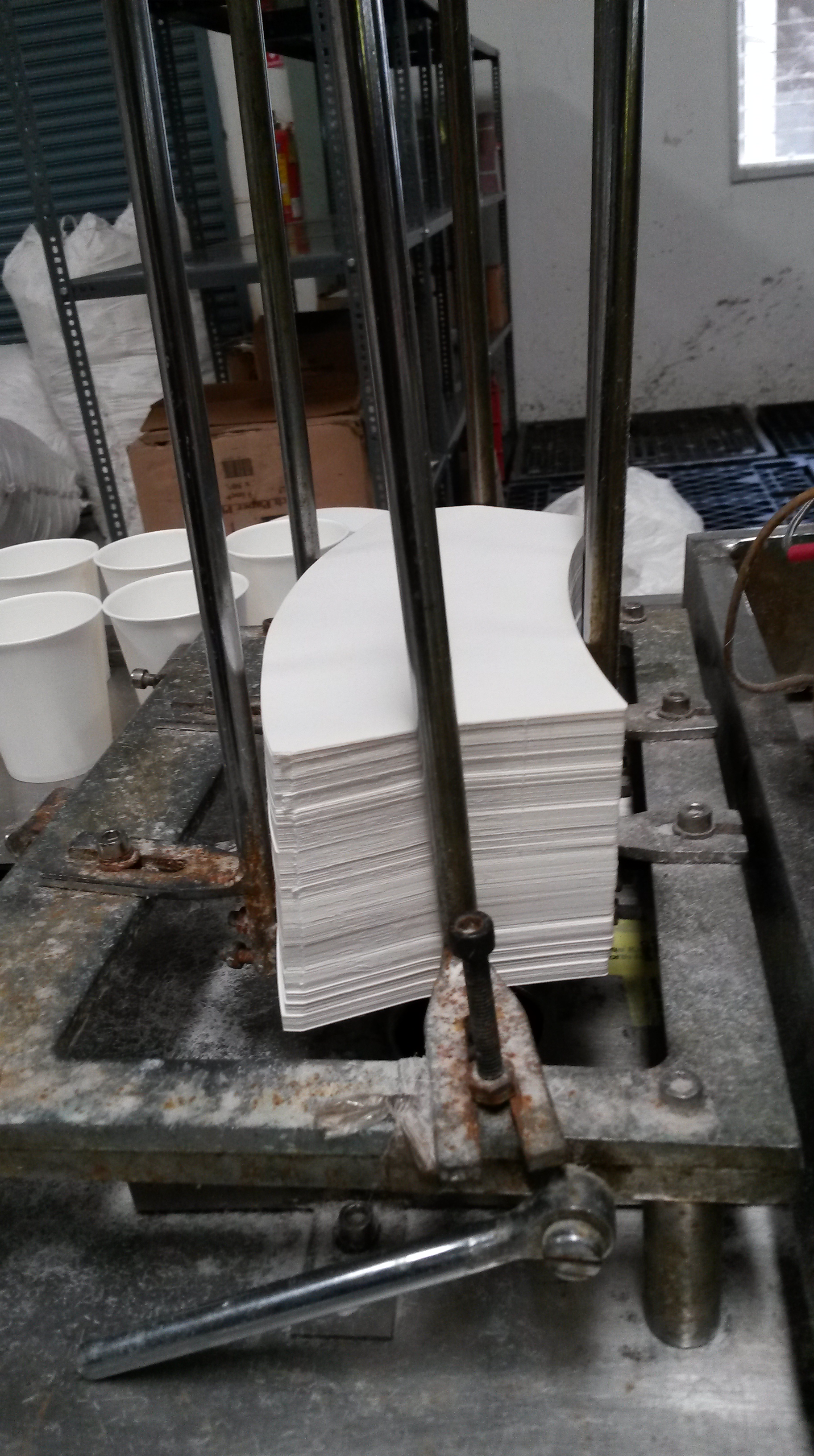
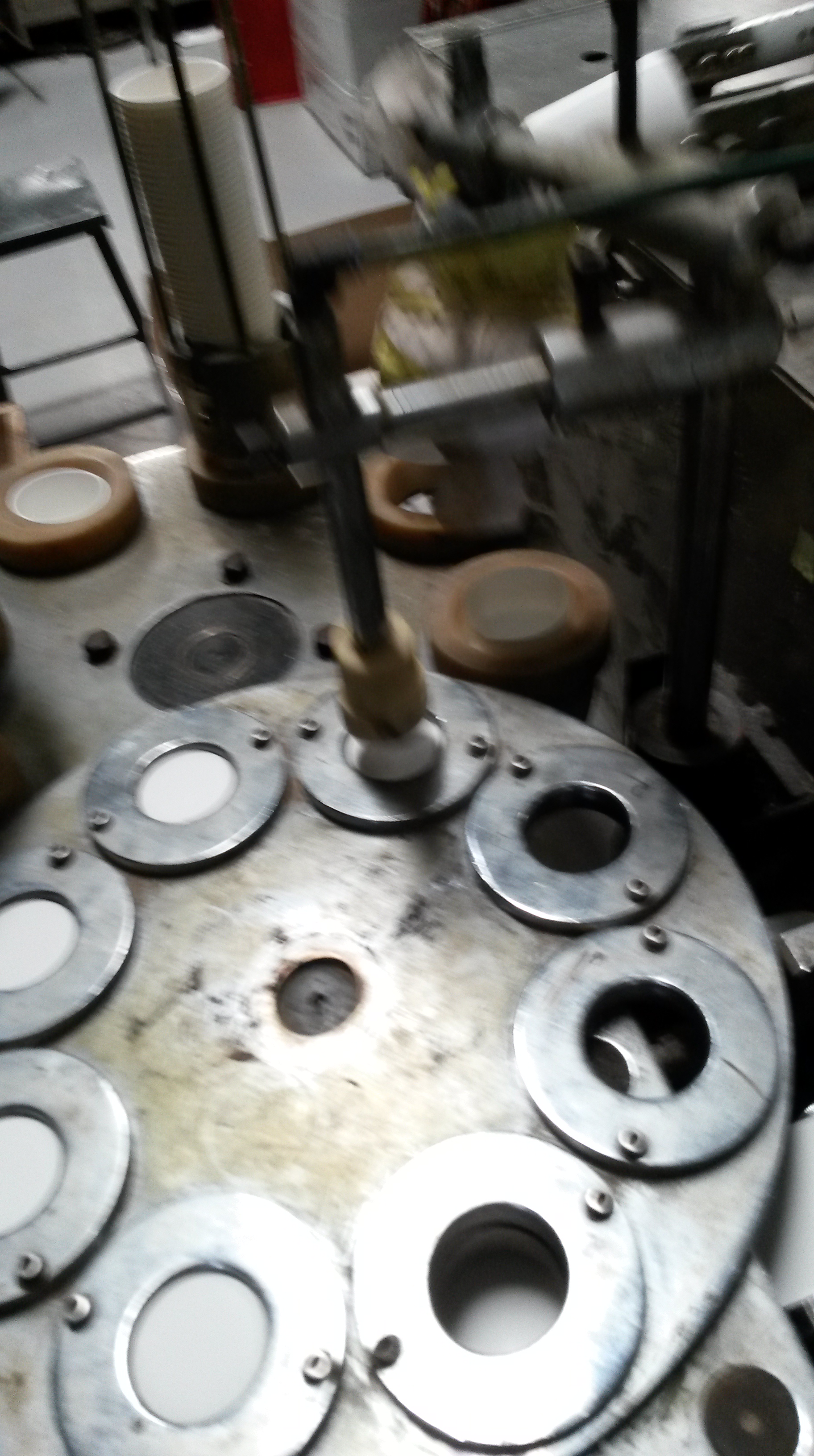
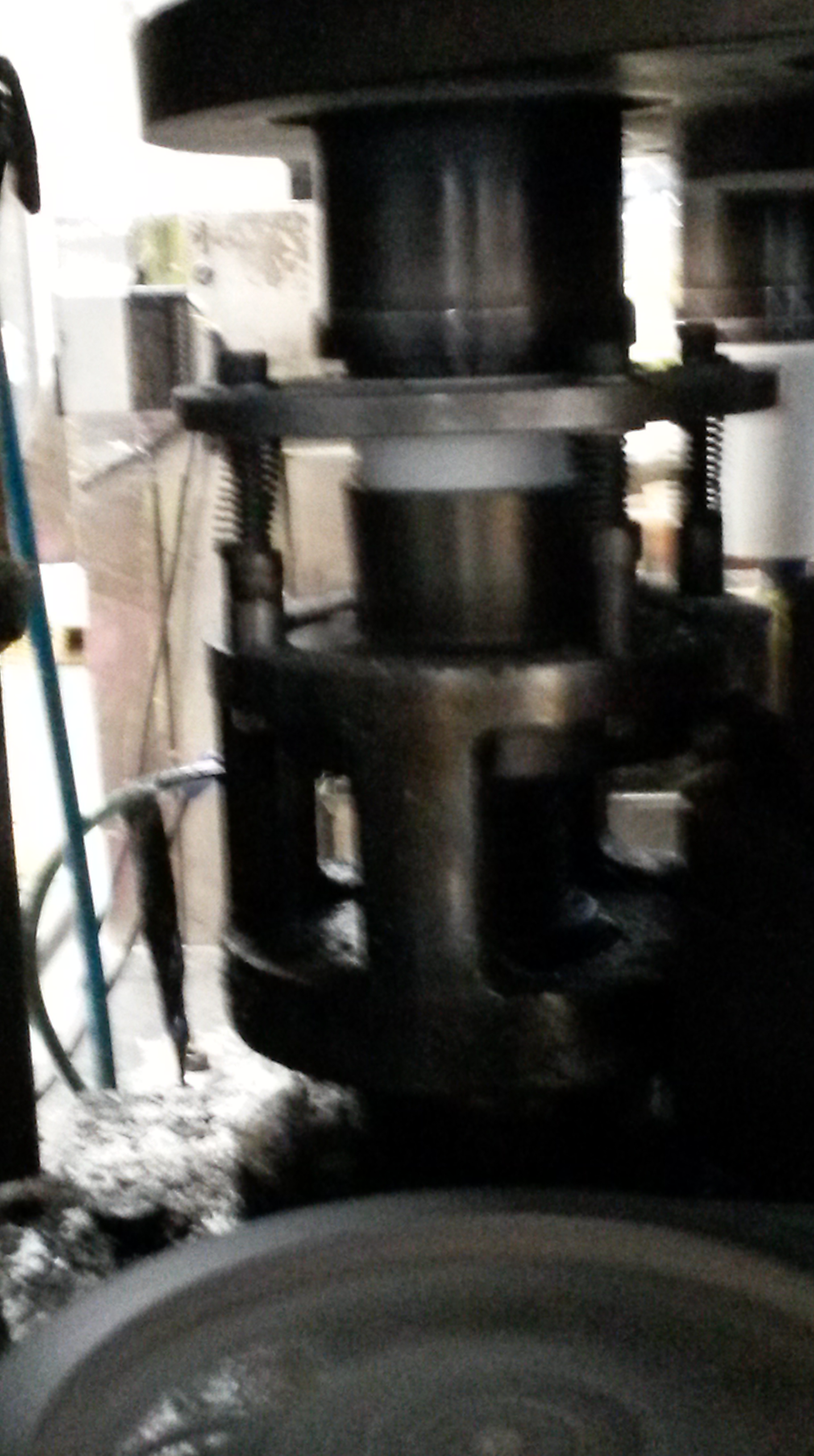
- Similar to the process of paper cups, paper plates also start out as a piece of cardboard. The cardboard is then put into the machine shown below. The two ends of the machine converge and engrave the shape of the plate onto the cardboard. The force that the two ends of the machine exert squishes the sheet of cardboard onto the engravings. Due to the force the cardboard fits into the small depressions on the metal plate, engraving the shape of the paper plate onto the cardboard

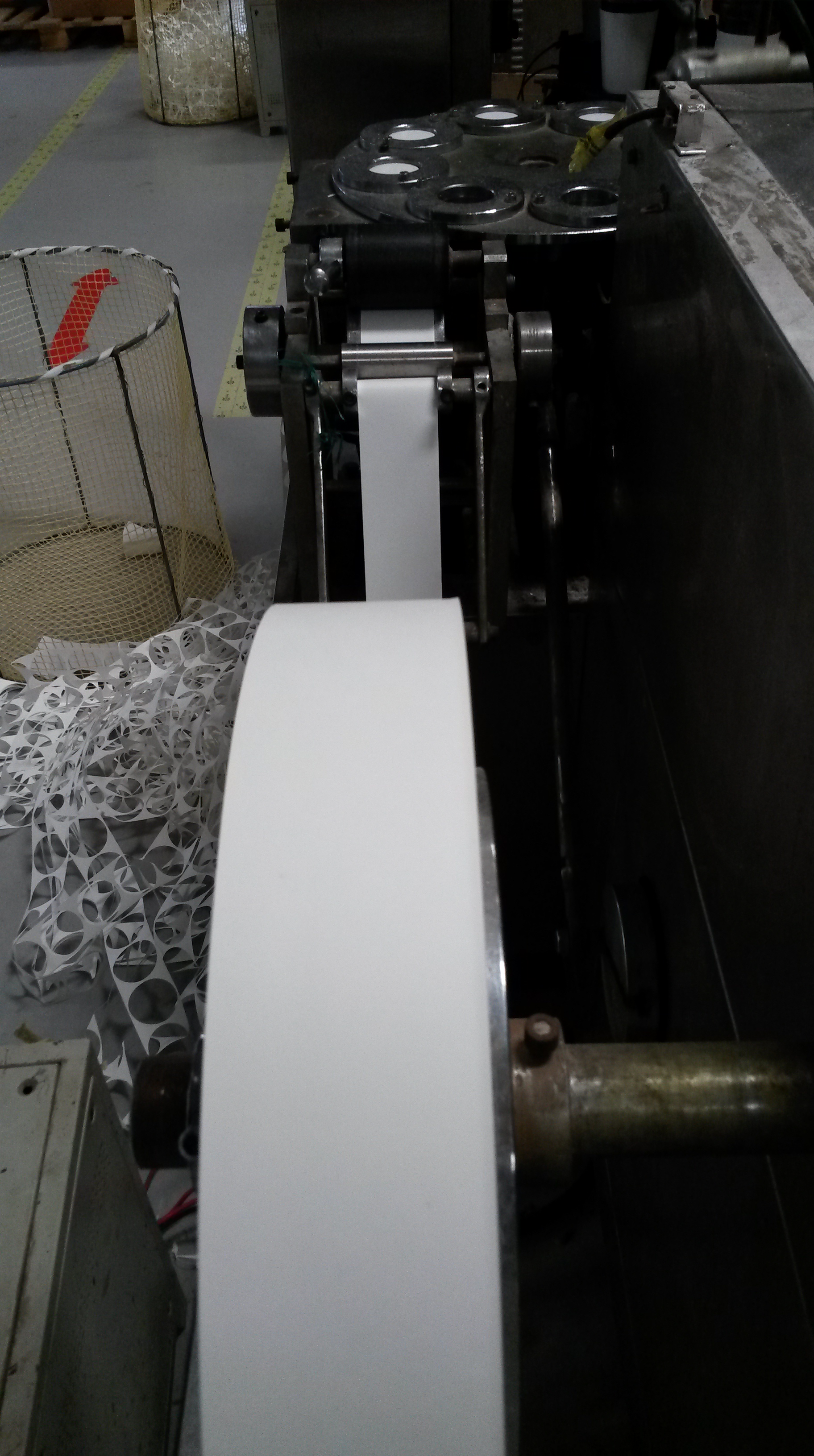
The circles engraved are then cut and fed into the machine.
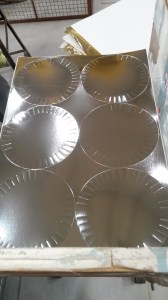
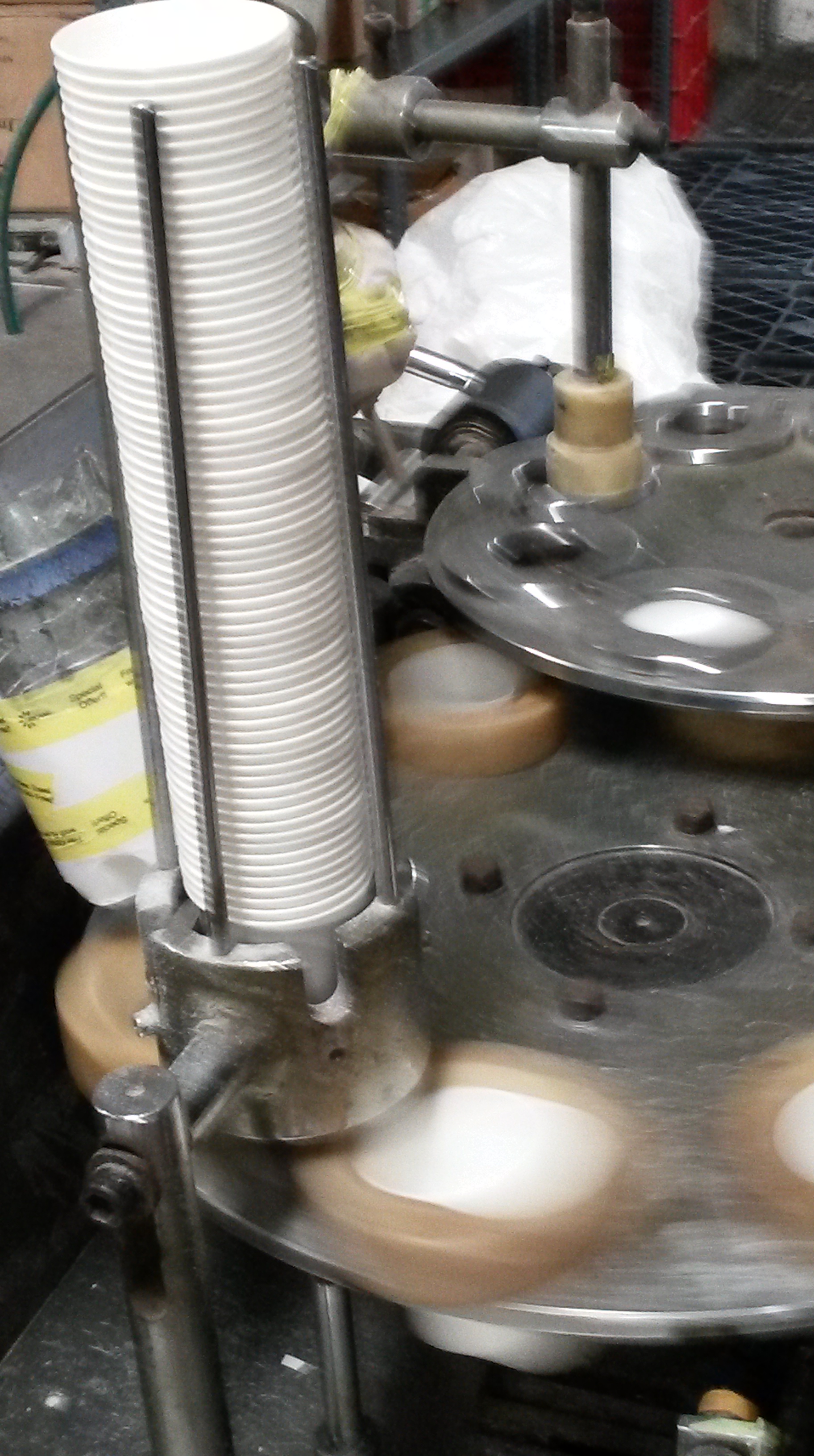
2. Using the principle of suction the pieces of cardboard are fed into the machine one at a time.
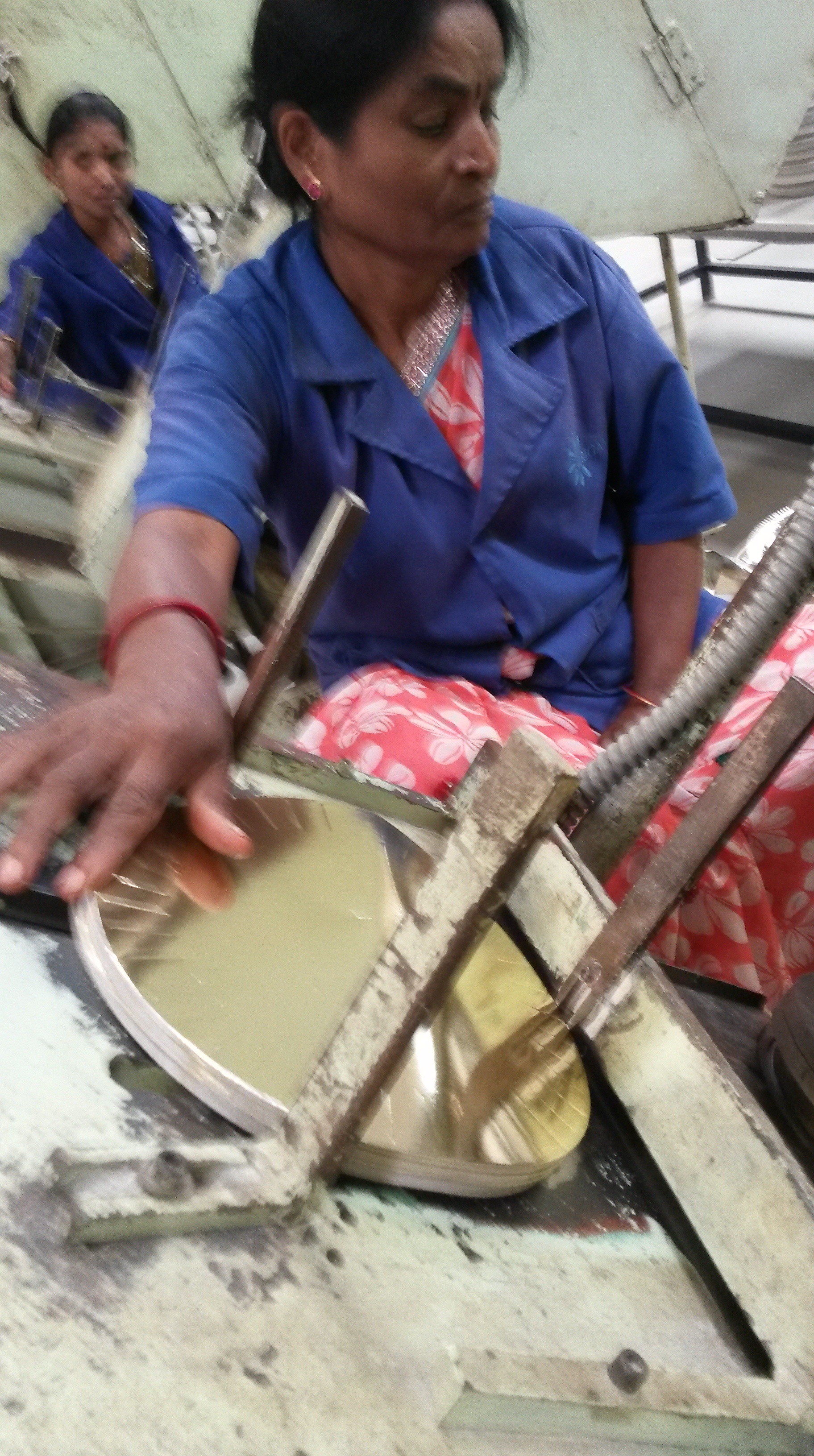
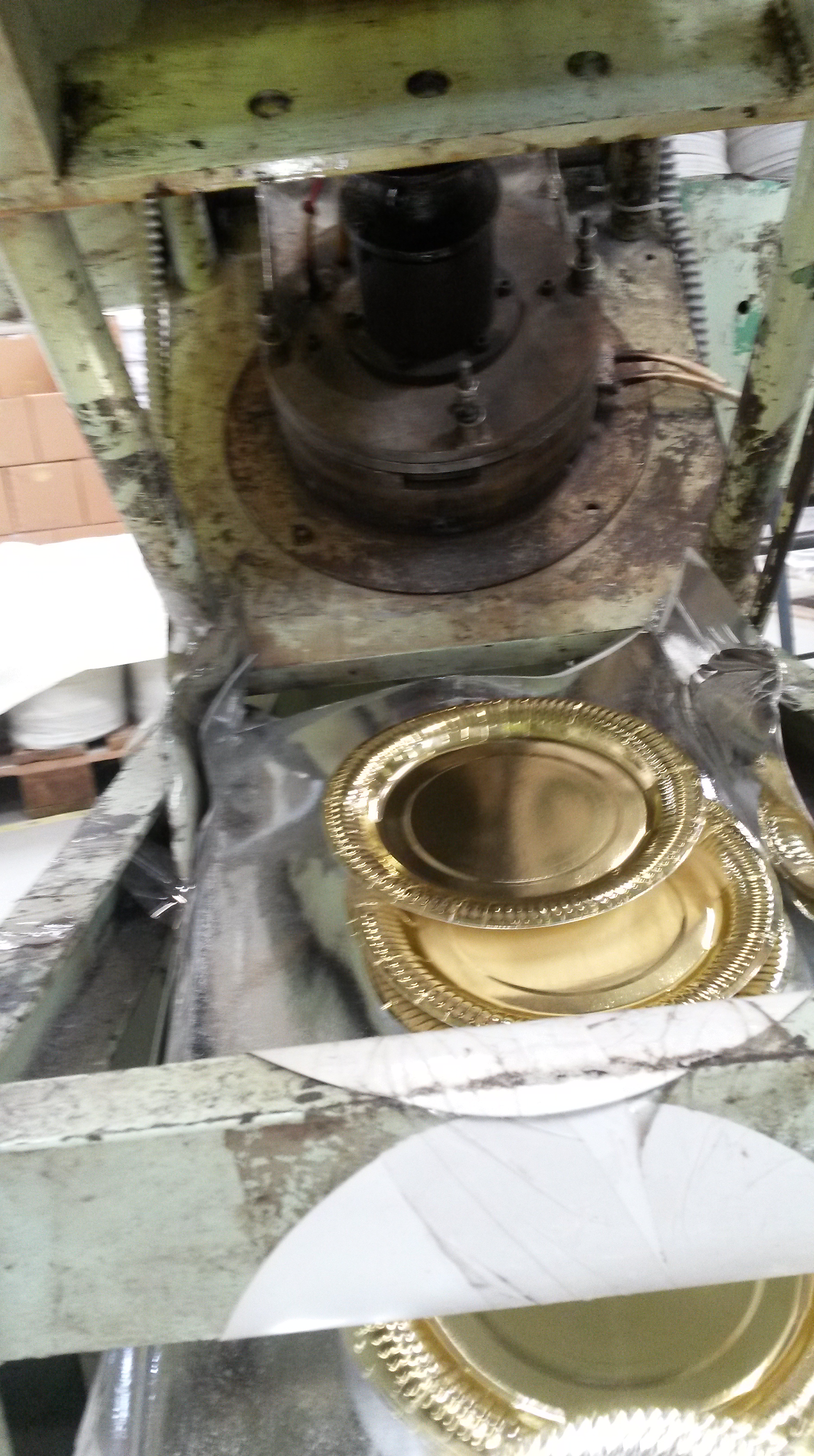
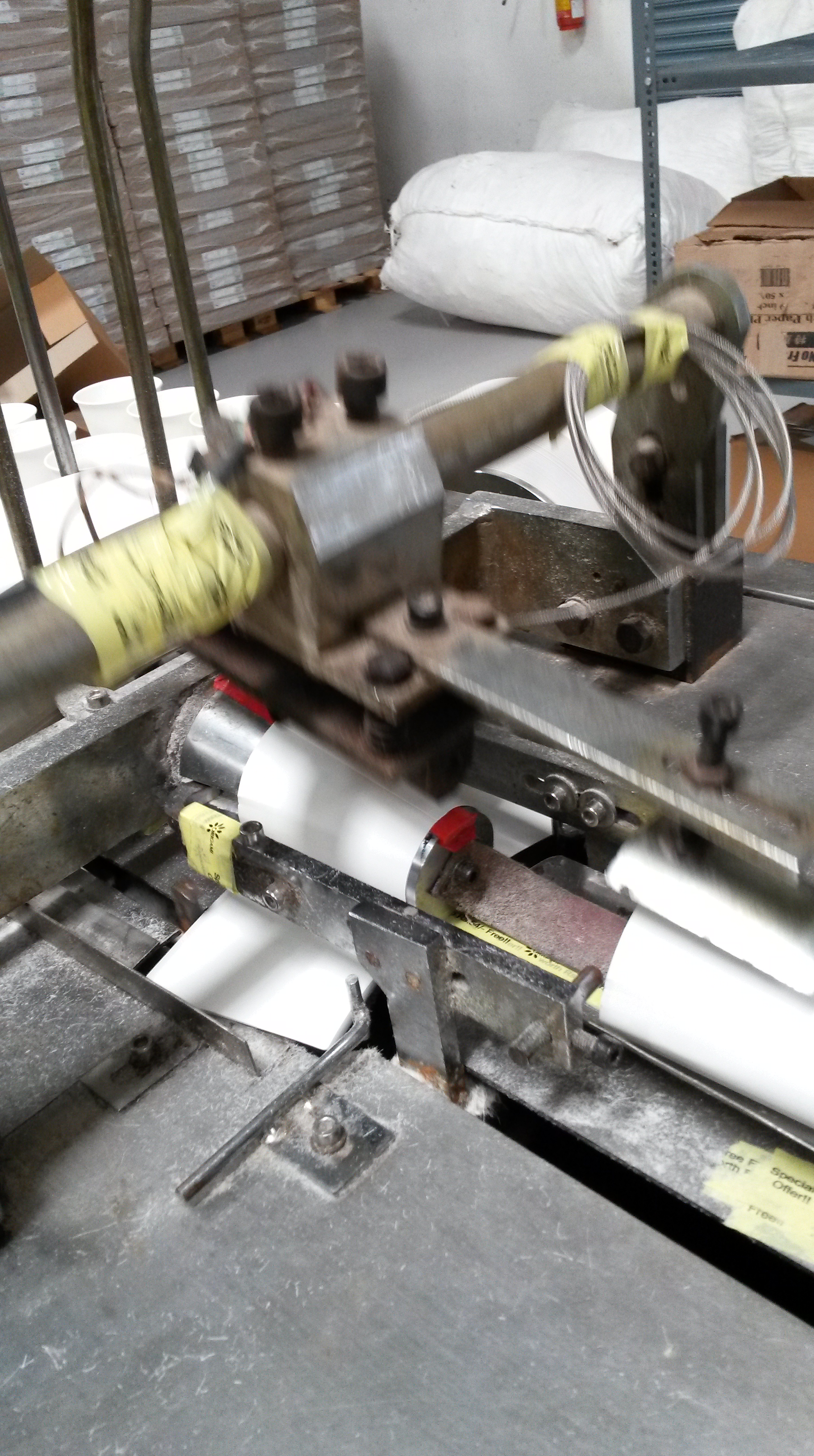
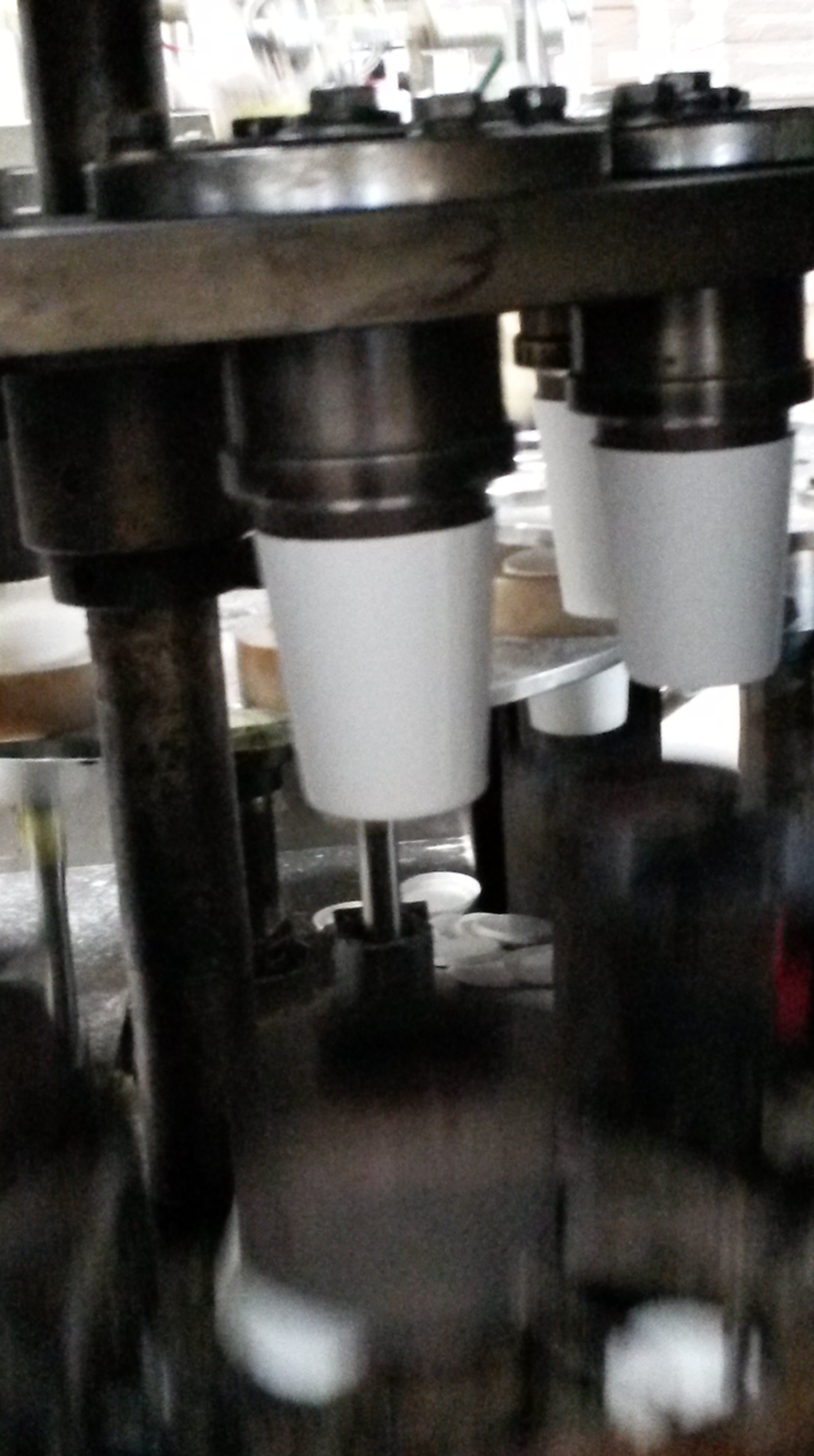
3. The machine is timed in such a way that as soon as the cardboard piece goes into the mould a rod from above moves downward. At the end of the rod, a metal piece is attached that fits perfectly into the mould below. The metal piece from above is also heated which makes it easier for the cardboard to be moulded into a plate.

The timing of the rod moving downward is not controlled by sensors, but is controlled mechanically. The rod which moves the cardboard down in step (b), triggers the movement of the rod moving downward onto the paper plate mould. Sensors could also be used, but the mechanical method is cheaper, thus is used.
The rod then moves upward again to reveal that circular piece of cardboard that is now a paper plate. The plate slides downward and another circular piece takes its place in the mould before the rod comes down again.
4. The plates are then manually counted and wrapped in shrink wrap before being sealed with a hand sealing machine. The machine applies heat onto the shrink wrap and melts it. Thus, the shrink wrap gets cut off and wraps the plate, as the picture shows.
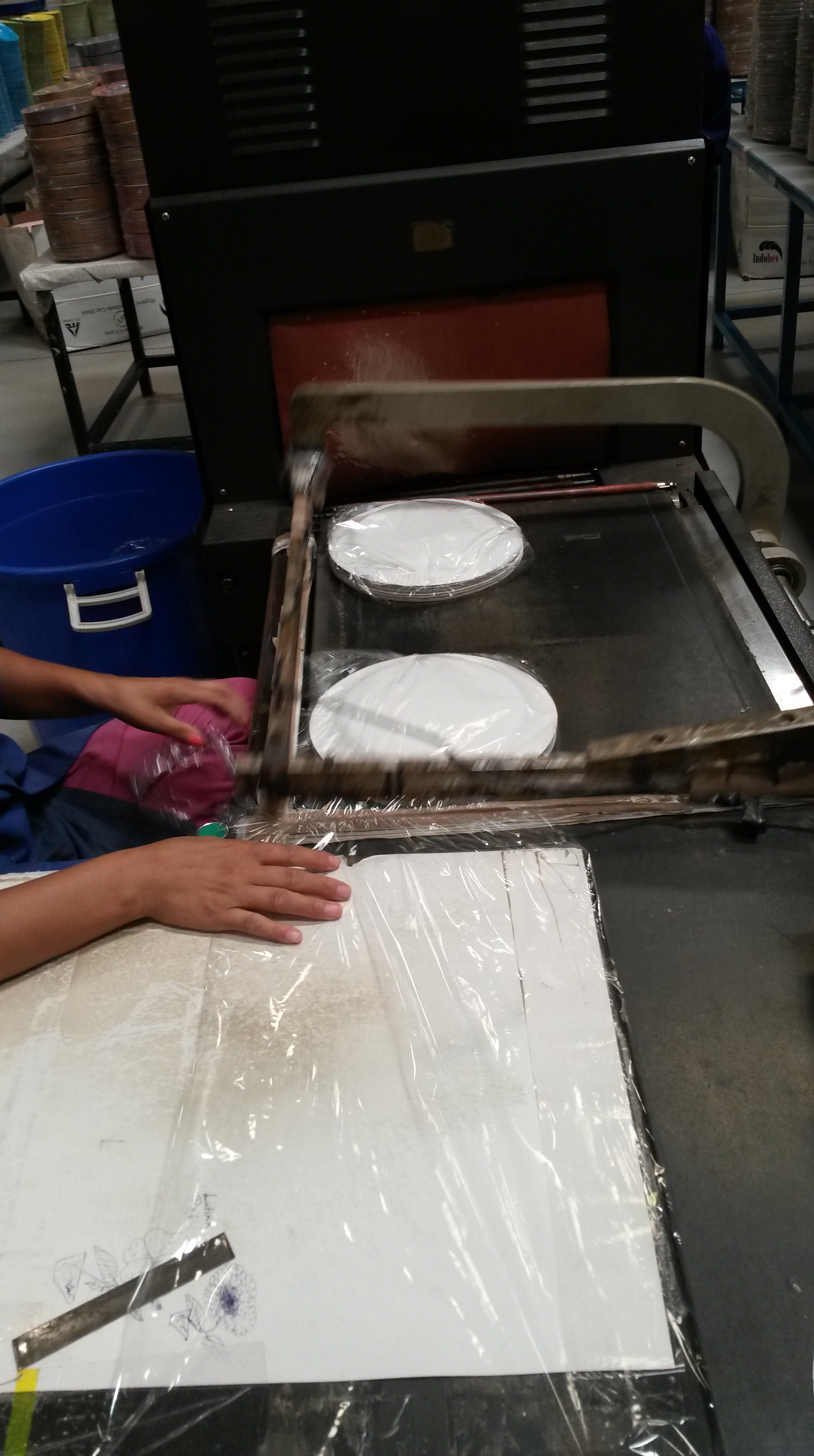
However, the shrink wrap is still loosely packed around the plates. To solve this problem it is put onto a conveyer belt which flows through a heated chamber. Normally, materials expand on the application of heat. However, shrink wrap shrinks, thereby allowing the plastic to firmly wrap around the stack of plates.
So how does shrink wrap work? Shrink wrap is made out of polymers (a long chain of small molecules that combine to form a macromolecule) that are oriented in an elongated state, as shown below. However, on the application of heat, the polymers break out of this elongated state and become entangled. As a result, the shrink wrap shrinks and firmly wraps around the plates.



 Divyanshu Pachisia